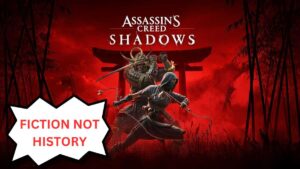
Assassin’s Creed Shadows: Ubisoft’s Latest Disaster? Tencent Prepares to Strike Ubisoft’s highly anticipated Assassin’s Creed Shadows has finally launched, but instead of being a triumphant return, it has left many players disappointed. With a lower-than- expected player count on Steam, criticisms of forced identity politics, and an uninspired storyline, this release could mark the beginning of the end for Ubisoft as an independent company—especially with Tencent reportedly eyeing an acquisition.
Underwhelming Launch: The Numbers Don’t Lie Despite a peak concurrent player count of 64,825 on Steam, making it the biggest Assassin’s Creed launch on the platform, these numbers pale in comparison to Ubisoft’s true heavy-hitters like For Honor (225,831 peak players) and Rainbow Six Siege (201,933 peak). Additionally, early reviews have been lukewarm at best, with the game currently sitting at a 77% approval rating on Steam. Many gamers were shocked to see that Assassin’s Creed Shadows only managed 25,000 players during prime hours at one point—far below the expected 100,000+ that a AAA title of this caliber should have achieved. Some users speculated that high prices, lackluster pre-release marketing, and competition from other major releases contributed to the weak performance.
The Story That Killed the Hype
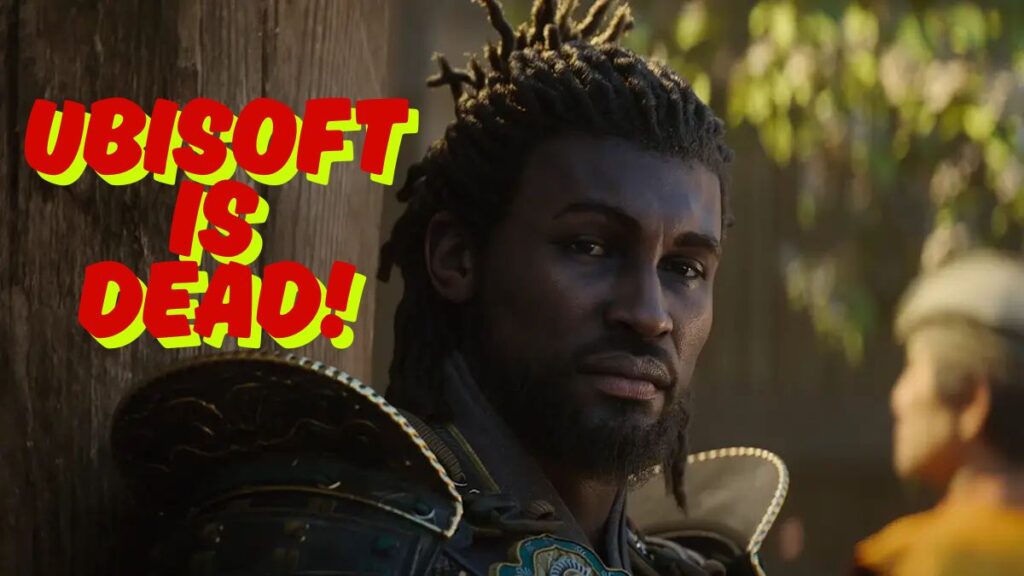
While Assassin’s Creed Shadows promised a thrilling adventure in Feudal Japan, the story appears to have missed the mark. The game allows players to choose between two protagonists: a kunoichi named Naoe and the historical African samurai Yasuke. While Yasuke is not a real historical figure, many fans felt that his inclusion as a main character was done more to appeal to modern identity politics rather than to craft a compelling narrative. Gamers have taken to forums to voice their frustration, saying that the story lacks depth and feels politically driven rather than historically immersive. Instead of embracing Feudal Japan’s complex socio-political landscape, Ubisoft seems to have forced a narrative that, for many, feels out of place in the Assassin’s Creed universe.
Japan Outraged Over Cultural Insensitivity
One of the game’s most shocking controversies is its disrespectful depiction of Shinto shrines, particularly scenes where Yasuke is shown destroying sacred sites. This sparked outrage across Japan, with politicians and religious groups condemning Ubisoft’s choices. Japan’s Prime Minister, Shigeru Ishiba, weighed in on the controversy, stating: “It is absolutely unacceptable to graffiti a shrine. It is nothing but an insult to the country… We will not tolerate any behavior that disrespects the culture and religion of our nation.” Japanese lawmakers even debated potential legal action against Ubisoft, citing concerns that the game could inspire real-world shrine vandalism
 Shohei Kondo YT
Tencent on the Horizon: Is This the End for Ubisoft?
Ubisoft’s financial troubles have been well-documented. With the publisher shutting down multiple studios, delaying releases, and implementing cost-cutting measures, many analysts believe the company is on the verge of a major restructuring. One of the biggest rumors circulating is that Chinese gaming giant Tencent is preparing to acquire Ubisoft. Given Ubisoft’s struggles to maintain dominance in the AAA gaming market, a buyout from Tencent could provide the financial stability needed to keep the franchise alive—though it could also lead to major changes in Ubisoft’s creative direction.
Final Verdict: A Misstep Ubisoft Can’t Afford
With Assassin’s Creed Shadows receiving mixed reviews, underperforming on Steam, and alienating parts of its fanbase, this could be one of Ubisoft’s biggest missteps in recent years. As Tencent looms over the struggling publisher, fans are left wondering: Is this the beginning of the end for Assassin’s Creed as we know it?